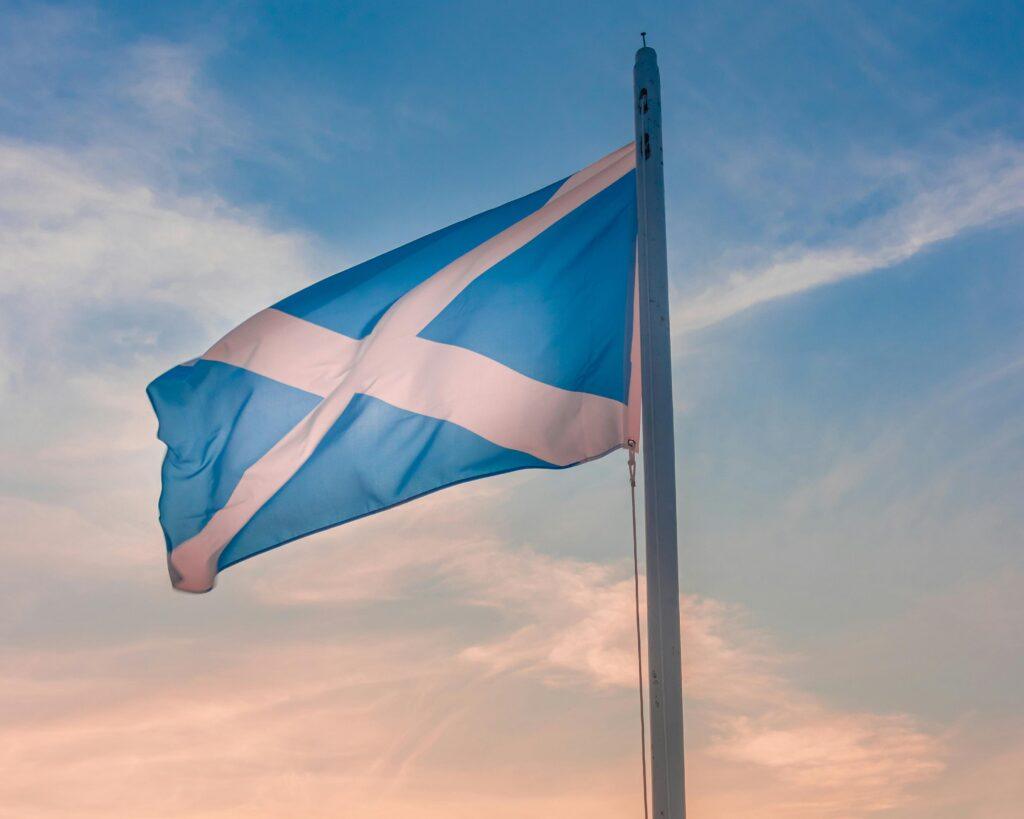
In 2014, Scotland voted to remain in the UK, with the independence vote losing by a margin of ten percent to the unionist faction – or, as an old acquaintance of mine affectionately dubbed them: “the only successful Remainers.” Five years later, Jeremy Corbyn stepped down as the leader of the Labour Party following a defeat in the 2019 General Election that was described as “catastrophic” by ITV News and a “disaster” by the then Shadow Chancellor John McDonnell. These defeats – from the perspectives of campaigners for Scottish independence and the pro-Corbyn component of the Labour Party – are more closely linked than might be suggested by a cursory glance.
Now, six years since the 2019 General Election and over a decade since the Scottish Referendum, we find ourselves returning to the ghosts of these past defeats – and, I fear, that the Corbyn-supporting left-wing across this (so-far) United Kingdom have failed to learn from the mistakes of the past. Karl Marx might have been correct when he said that history repeats itself: “the first time as a tragedy, the second time as farce,” but I see very little humour, and even less cause for celebration, with the appearance of Jeremy Corbyn and Zarah Sultana’s new political party. To be clear, it’s not that I’m not rooting for the dynamic duo; a genuinely left-wing, populist political alternative to the (so-called) Labour Party under Kier “shake it to the right” Starmer could be just what England needs to counter the rise of Nigel Farage’s Reform Party. As for the rest of the United Kingdom…well, I’ll come to that in a moment.
In all fairness, it’s not as though my pessimism isn’t without at least some justification. This isn’t the first time we’ve seen a progressive alternative to the two-party paradigm spring up out of nowhere…you tell me how much they managed to accomplish. The second-half of the twentieth century and the early decades of this tedious twenty-first is littered with the corpses and cripples of left-wing (and “left-wing”) parties: from the Galloway fanclubs of the Respect Party and the Workers Party of Britain; to the rebranded Communist Party of Britain and the impossible-to-elect impossibilists (look it up), such as the Socialist Party of Great Britain. All of these well-meaning parties were full of well-meaning activists, politicians and campaigners (and George Galloway), but they didn’t get anywhere. Why didn’t they get anywhere? Well, that’s obvious – because the Labour Party existed. I don’t agree with the Conservative columnist, Peter Hitchens, about a great many things, but he is correct in his assessment that a political party needs to die – formally – in order for a new party to rise and take its place. Hitchens might well be correct that both of the major political parties are little more than “corpses, stiff with rigour mortis, propping each other up,” but people still seem more than willing to vote for the two zombies – don’t ask me why.
It is true that Corbyn and Zultana’s new party has achieved, as of the writing of this article, in getting 600,000 people to sign up to the Your Party website. To be sure, this is no small achievement, but – and you’ll have to forgive me for playing the pessimist here – somehow, I find it difficult to join in the almost universal (dare I say, uniform?) celebratory reaction that has swept across the UK’s progressive commentariat. First of all, it is important to remember that signing up to a website does not a committed party member make. Anyone can sign up for a political cause, that doesn’t necessarily make them a reliable voting base. At the moment, all that this tells us is that an awful lot of people with Left-wing sympathies are awfully dissatisfied with the current direction of the Labour Party under Sir Keir Starmer, but it will be difficult to judge how serious this surge of support is in the short term. It may well be that Corbyn and Sultana’s new party will achieve little more than becoming a sort of Left-wing version of the UKIP protest vote. Now, this wouldn’t necessarily be the worst thing in the world; it might indeed be possible for Corbyn to put pressure on the Labour Party from the political Left – if only Keir Starmer could get it through this dense, square skull that his attempts to pander to the Right will be largely ineffectual; he is just too despised by the modern Right-wing voting blocs: the populists, the Conservative Nationalists, the postmodern Christians…he’s never going to win them over. It doesn’t matter how often he tries to ape Enoch Powell, he will always be a stranger to the contemporary Right. Once Kier realises that, then it is possible that he will start to feel a leftwards pinch, especially if Corbyn’s new party manages to eat up around ten percent of Labour’s traditional voters. The problem is, this strategy relies on the intelligence, strategic-thinking and self-awareness of Sir Keir Starmer, a man who appointed a cut-throat landlord to be the Under-Secretary of State for Building Safety and Homelessness – now, there’s a title that would make Doleres Umbridge squirm with envy. What worries me is this: even if Corbyn manages to translate the initial support he has received online into a committed voting base, Starmer and his cronies will probably just interpret this as a sign that they need to drag the party further still to the Right, far enough that, before long, Nigel Farage will start to look like a broadminded, milktoast Liberal.
Secondly, it is important to remember the UK’s political system is designed to put a stopper on populist political uprisings; from both the Left and the Right. Left wingers in the past might have breathed a sigh of relief in 2015 when UKIP, despite acquiring 3.8 million votes, only managed to secure a single MP in Parliament, but I doubt they will be as cheerful if the UK’s system of First Past the Post results in a similar lack of proportional (and, dare I say, a more accurate) representation for future candidates in Corbyn’s new party. This is hardly a new struggle for alternative Left-wing parties to overcome; such problems have long-since dogged the Green Party who, despite achieving just under two million votes in the 2024 General Election, only managed to achieve four seats in Parliament – a monumental triumph for the Greens, certainly, but it is not all that easy to be particularly enthused by the appearance of four, largely ineffective and powerless, MPs. Especially when set against the mammoth 411 seats obtained by Starmer’s Labour Party – a result that is even more staggering when you consider the fact that less people actually voted for Labour in 2024 than they did in 2017, when the party was led by Jeremy Corbyn. To borrow a line from The Economist, whilst it might be true that the 2024 General Election was the least representative ever, the harsh truth is that, when it comes to British politics – notwithstanding drastic electoral reform, which I would fully support – this simply doesn’t matter. So, whilst I’m not exactly unhappy or even unmoved by the surge of support that Corbyn and Zultana’s new party is receiving, I would just like to urge my fellow Leftists to, in the words of Walter White, tread lightly. The optimists might like to say that the glass is half full, but, if we all parrot that line, then nobody is ever going to top up our drinks. The disenfranchised and politically frustrated Left will have a long, hard road ahead if it wants to be more than a fashionable thorn in the side of the Labour Party.
That’s before we get into all this entirely unnecessary and avoidable confusion about the party’s name. Don’t get me wrong, I’m all for democratisation – but was it really necessary to lumber us all with this clunky placeholder until some undetermined date when the inaugural conference will take place and the party’s true name will be decided. Wouldn’t it have been easier just to come up with a name? The People’s Party, or something similar, would undoubtedly have done the trick. Then we could have avoided a fortnight of (admittedly stale and uninspiring) jokes directed at the new party regarding the initial confusion over the name. One particular favourite of mine was the suggestion to rename the organisation Party McPartyface. Ah, democracy. You can’t live with her, but you really can’t live without her. PoliticsJOE found himself in an awkward exchange with the party’s co-founder, Sultana on the 24th of July after tweeting: “Jeremy Corbyn and Zarah Sultana have made a joint statement on the foundation of their new political party, named Your Party,” to which Sultana herself hastily responded by declaring: “It’s not called Your Party!” When PoliticsJOE retorted by asking: “what is it called?” he received no public reply from Sultana, though the users of X were quick to answer on her behalf with a slew of increasingly absurd and crude suggestions. Even Corbyn’s biggest cheerleader, Owen Jones – who I do respect for his principled stand against the British and US sponsored slaughter in Gaza – couldn’t help stumbling upon an important point regarding the party’s non-name in his most recent interview with Jeremy Corbyn when he said: “The new party, which is yet to be named…I don’t mind what it’s called. If it’s called Wibble, as long as it’s got some good policies to address all the crises you’re talking about.” I agree with Jones here; it doesn’t particularly matter what the party is called, so long as it is called something. So why force us to sit through this awkward no-name limbo? Indeed, it might well have been easier just to roll with PoliticsJOE’s mistake and make Your Party the official name. Incidentally, Jones is also a fan of The People’s Party as a name. The point is that, whilst it might be a stretch to suggest that “confusion reigns” over the name of Jeremy Corbyn and Zarah Sultana’s new party, the fact that there has been any confusion at all is a bad omen. The-yet-to-be-named party is going to have enough hurdles to overcome without its leaders tripping over their own branding.
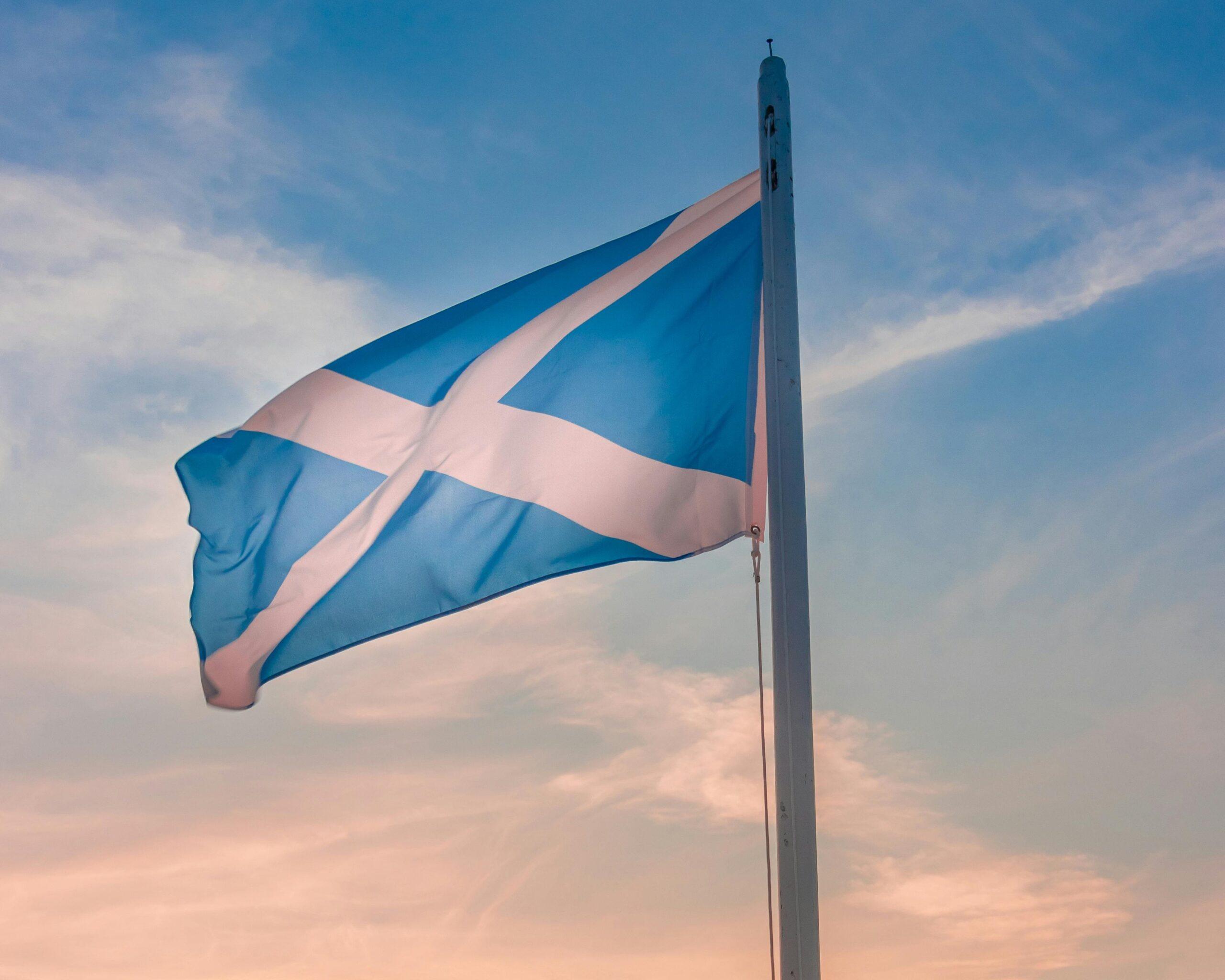
Now, let’s return to the question of Scottish Independence. What on earth does this have to do with the new party, or Jeremy Corbyn for that matter? Well, the fact that we even have to ask that question is, in some ways, part of the problem. Scotland is often forgotten about, when it comes to the rollercoaster ride of British politics. The occasional scandal crops up in our national media but, ever since the 2014 referendum, things have been rather quiet and vague on this side of the border. If we were to accept this at face value, you might be forgiven for thinking that the question of independence has been more or less settled; that Scotland is, reluctantly, willing to remain a junior partner within the United Kingdom. After all, the Scottish Nationalist Party has been in power now for fifteen years, both as a minority and majority government, and what, really, do they have to show for it? What is John Swinney’s daring strategy in order to secure independence? The answer is brilliant in its lack of originality. Let’s have another referendum. Goodness gracious, we really are in the age of the sequel, aren’t we? Indyref2: The centrists strike back…
The First Minister of Scotland is insisting that the only way to secure the independence of his nation – or, at least, a second referendum on independence – is to secure an SNP majority at Holyrood. Currently, the SNP are a minority government with 60 out of 129 seats. In order to achieve an SNP majority, they will need to win a total of 65 out of 129 seats in the 2026 elections. This is not an unachievable task; especially with Reform and the Scottish Green Party gobbling up Scottish Labour. There are, however, considerable tensions brewing within the SNP’s more radical elements, with many members not content to wade through another independence referendum – a curious reminder of the important distinctions that exist between England and Scotland. In England, the defeated Remainers wasted almost no time before they began bleating for a second Brexit referendum. Advocates for Scottish Independence seem far more reluctant for a second attempt at a failed strategy. John Swinney, the current leader of the Scottish Nationalist Party, has insisted that a legally agreed referendum is crucial for obtaining a “domestic and international legitimacy for an independent Scotland.” This position has not been universally – or, indeed, uniformly – embraced by the entirety of the SNP. Forty-three different branch members in the SNP have expressed support for an alternative proposal, which would call for the list of votes at the 2026 Holyrood election to be treated as a de facto referendum for independence, with “ballots for pro-independence parties and Unionist parties representing Yes and No votes respectively.” In other words – use the election itself to settle the question on national sovereignty, instead merely treating it as the prologue to a second vote.
The point that I’m trying to make is that it isn’t 2014 or 2017 anymore. The introduction of a brand-new, London-based Left-wing political party will inevitably come up against the hurdle of Scottish independence. Which means Corbyn and Zultana will be forced to take one of three approaches. The first, and least likely option, is that Your Party (See? It just sounds awkward) will stand against Scottish Independence, forcing themselves into an alliance with their natural ideological enemies: the Conservative and Unionist Party, Labour and Reform. The second option, which is the path I predict Your Party will take, will be to adopt the pro-second referendum position. In many ways, this will (upon first glance) be the safest stance for a new party to embrace. The danger of this position is twofold: on one hand, it will force Your Party to remain, at best, a subordinate partner to the SNP and, at worst, a minor, probably ineffectual rival. Why ineffectual? Well, this brings me onto my second concern: by adopting a pro-referendum position, Corbyn and Zultana will inevitably alienate the more radical, progressive elements of the SNP and the wider independence movement; the elements of the independence movement that, on other issues, both domestic and international, would be inclined to put their support behind a Left-wing alternative, such as Your Party.
This is why I brought up Corbyn’s previous defeat and the Brexit referendum. Whilst the likes of Owen Jones will insist that Corbyn’s downfall was entirely the result of a Blairite conspiracy within the political and media establishment, this doesn’t offer the full picture – don’t get me wrong, there is more than a grain of truth to this, but when an entrenched columnist in a major newspaper like The Guardian starts banging on about the media establishment, my eyes just can’t help but roll. I’m probably just bitter. Who doesn’t want to be part of the media establishment?
A significant reason why Corbyn lost the so-called Red Wall comes down to a failure to understand the Labour Party’s voting base, in particular, the more socially-conservative, economically progressive, pro-leave voters in England’s north. Corbyn, despite his best efforts, was perceived as something of a flip-flopper with regards to Britain’s relationship with the rest of the continent. Corbyn spent the bulk of his political career as a known Eurosceptic, voting against Britain’s membership of the European Economic Community in 1975. In 1996, Corbyn expressed his dislike towards what he perceived as a fundamental lack of democracy within the European Union, calling it a “European bureaucracy totally unaccountable to anybody.” With this history in mind, Corbyn’s willingness to accept the results of the Brexit referendum – unlike many within both the Labour Party and its base – is less surprising. What is perhaps more surprising was Corbyn’s statement in 2018, one year after he had instructed Labour MPs to vote to trigger Article 50. Corbyn stated that “If Parliament votes down a Tory deal or the government fails to reach any deal at all we would press for a General Election. Failing that, all options are on the table.” Even if it wasn’t explicitly mentioned, everyone understood that this included a push for a second referendum. Furthermore, on the 17th September, 2019, as part of his determined campaign to prevent a No Deal Brexit, Corbyn wrote in The Guardian that “a Labour government would secure a sensible deal…[which would be]…put to a public vote alongside remain.” This twisting and turning of Corbyn’s stated position regarding the EU, which, perhaps, was nothing more than a well-meaning man’s attempt to react to events as they hurtled towards him, created confusion over his exact position on Britain’s ideal relationship with the EU, something that – especially once it was seized upon by the aforementioned media establishment – put him into conflict with both the (largely pro-remain) Labour Party membership and the North England voting bloc that, whilst traditionally supporting Labour, had voted in favour of leaving the EU in 2016.
In other words, one significant contributing factor to Labour’s defeat in 2019 was Corbyn’s unintentional alienation of a voting base that, under different circumstances, would have been inclined to support him. Well, if he isn’t careful, Corbyn risks repeating this mistake with the young, pro-independence Scottish progressives – and they are not to be underestimated as a political faction. They are growing restless and more active – and their patience with the pro-referendum pledges of men like John Swinney is beginning to evaporate. People want a radical solution to political problems and, whilst no one is denying Corbyn’s radical credentials, I can’t help but doubt that he’s the wrong kind of radical for Scotland – at least, until his position on Scottish independence is made clear – and, without Scotland, which has historically often been forced to act as a marginalised and maligned battering ram for British leftism, or, to be more precise, unionist leftism, Corbyn’s new party will struggle to find more than a foothold in Parliament. One way or another, Corbyn will have to convince the young, pro-independent Scottish-left that Your Party is really for them after all.